People Before Profit: No more “broken” systems Part 1
A political grounding in the fight against racial capitalism and the Hostile Environment
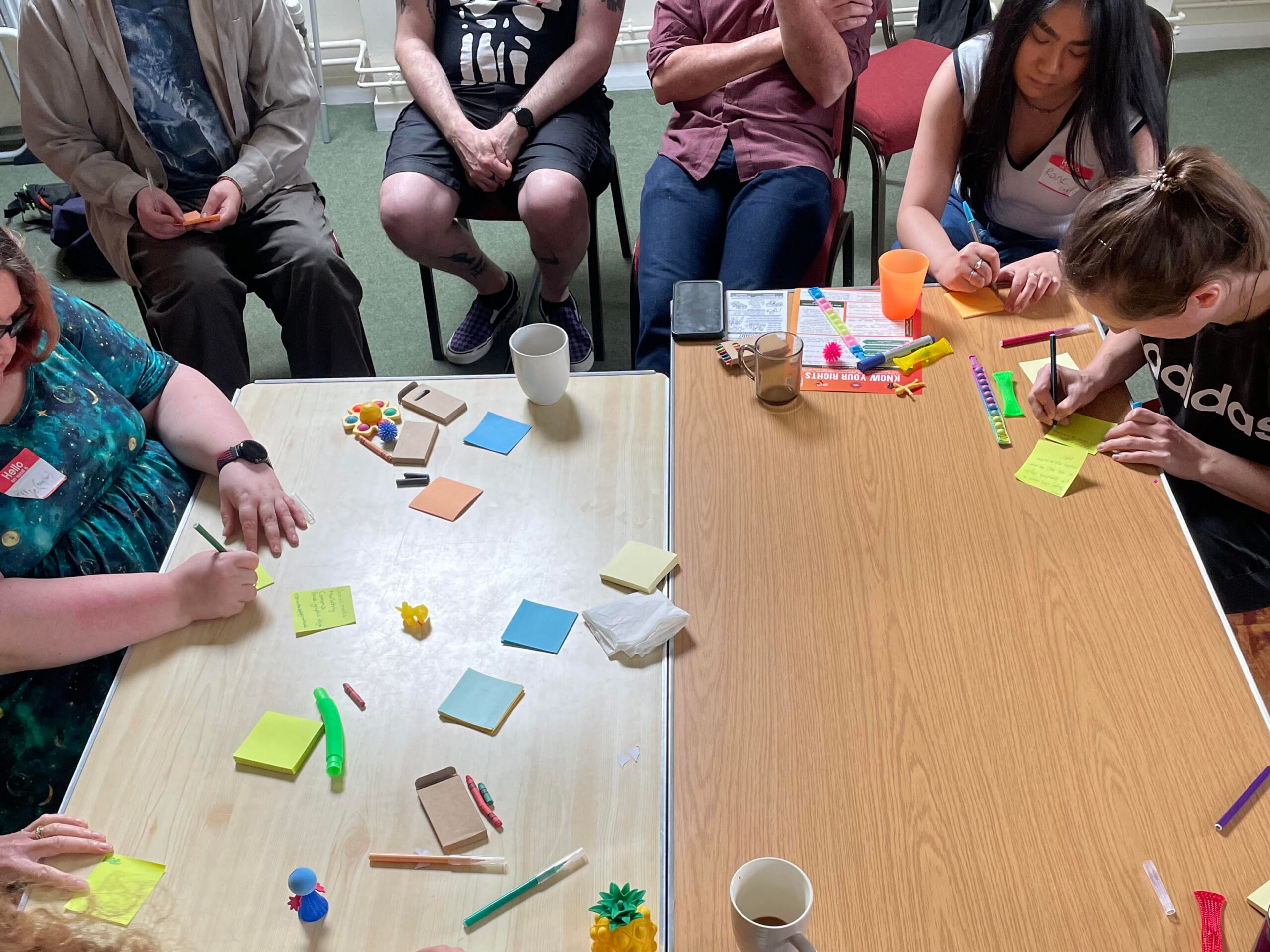
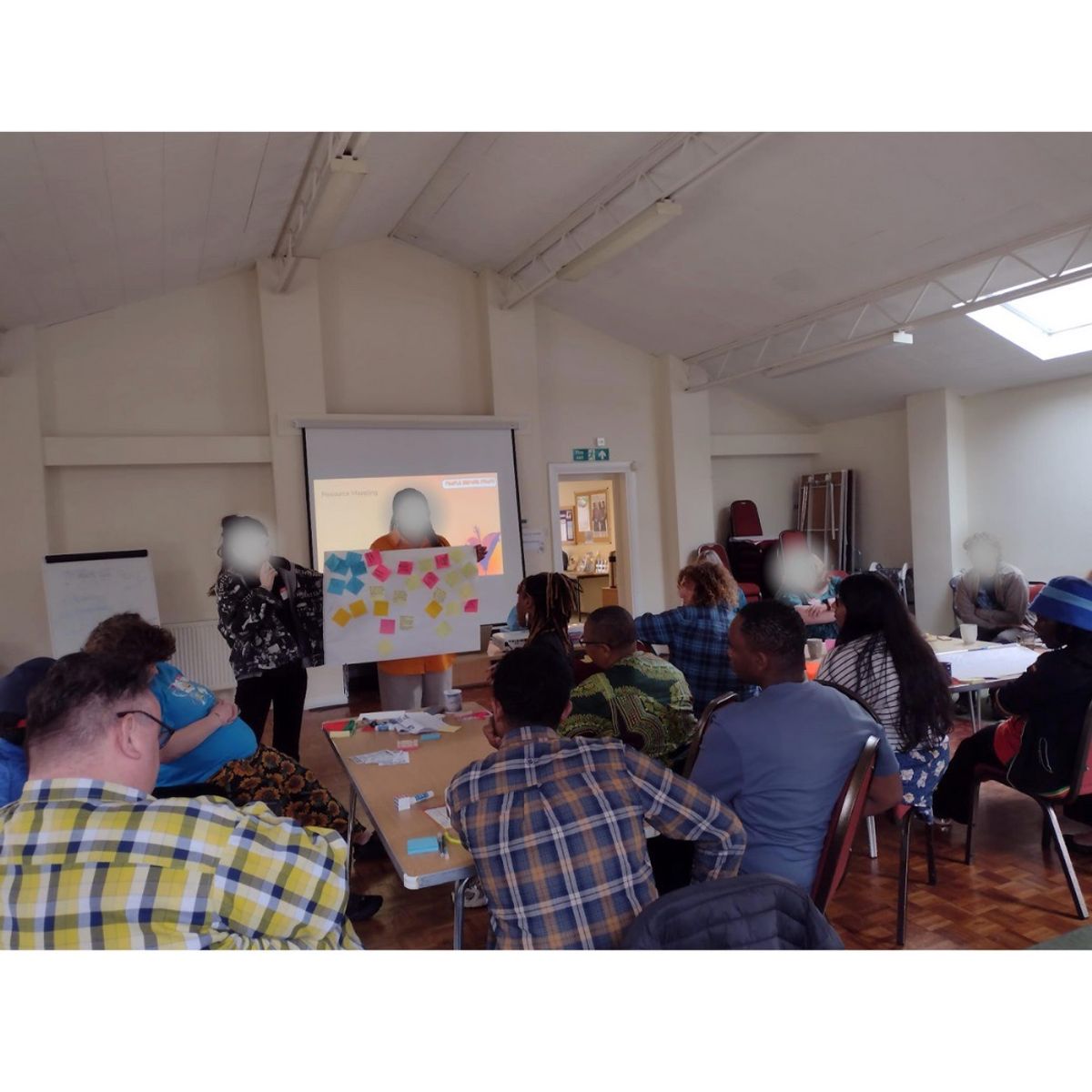
On a bright and sunny afternoon in April, Stop the Scan called organisers, friends, and community members fighting the Hostile Environment to a springtime convening called People Before Profit. The following blog is an extension of the discussions which took place at the convening and political grounding for meaningful actions suggested by our communities. People before Profit explored the ways we resource our movement and the following question:
- What does it mean to put people before profit?
The pursuit of profit is an endless journey, where those in power exploit working people, hoarding wealth and assets, and constantly extracting from the labour of workers. In this system, everything becomes a commodity, even the most fundamental aspects of life.
Under capitalism, the profit motive drives the hoarding of wealth for the few while draining resources from the many. It thrives by commodifying everything we need to live: from housing to education, from land to care. In every sphere of grassroots movements, people know very well the drive it takes to organise on a shoe-string, putting together support for one another and fighting for justice with very little.
But what happens to movements when we become dependent on funding models? External power holders often encourage obscene amounts of labour to receive money, only to have countless restrictions and control over what you can say or how you can act.
When we prioritise keeping one another alive, when we choose the survival of our communities, care, and joy, we begin to reject this profit-driven logic. We begin to build something else.
In our convening, we sought to trace the community resources that already exist within us, to explore what we can rely on and where resources are missing. In a system driven by competition and scarcity, we ask:
- What resources do we have to keep each other thriving?
- And crucially, where do we locate the resources that need to be reclaimed?
This is a call to refuse the mindset of scarcity imposed by capitalism and to build from a place of abundance instead. By coming together to identify and reclaim what has been stolen, we begin to lay the groundwork for a different kind of system: one where people are placed before profit, and care is at the heart of how we live.
Naming the System: Racial Capitalism
The capitalist system we have is not just inadequate; it actively upholds structures of racism and colonialism. As a system of power and domination, capitalism disproportionately impacts people of colour, especially Black people, who are more likely to be exploited and alienated from their labour.
This concept is known as racial capitalism, a term first coined by sociologist Oliver Cox and later expanded by political theorist Cedric Robinson. Robinson explicitly connected capitalism and racism, arguing that capitalism has always depended on the structures of slavery, genocide, and imperialism. Capitalism doesn’t just have racist outcomes, but was built upon theft, enslavement, and the displacement of Black, Indigenous and colonised people.
Racial capitalism is the system that:
- Extracts labour from migrants while criminalising their existence
- Ring fences public goods and redistributes them to private hands
- Depends on borders, policing, and surveillance to uphold its order
- Treats Black, Brown, and migrant lives as disposable — unless profitable
Racial capitalism is not just an abstract theory; it is a lived reality that shapes the world we navigate today. Racial capitalism is the system which makes clear the connection between colonialism and our current anti-migrant system. The Hostile Environment, a structure of anti-migrant policies created by Theresa May in 2014, and continued in the system of mistreatment and alienation of migrants today, is driven by the need for a migrant population to serve as an exploited working class. A population that is disposable, surveilled, and dehumanised for the sake of profit. This exploitation is built into the very fabric of the state’s policies, institutions, and systems.
Underground and Overground Exploitation
The legacy of racial capitalism is visible in the brutal realities of the underground and overground economies that make up the infrastructure of exploitation.Some of the following areas were discussed by organisers at the convening:
- The Underground Economy: This is where migrants with the minimum state support or no recourse to public funds (NRPF) face exploitative, precarious, and often abusive conditions. Parasitic employers prey on those most vulnerable, paying wages far below a living standard, subjecting workers to extreme overwork, and exploiting their silence through threats of deportation. Some migrants are even coerced into invisible indentured servitude under the guise of domestic worker visas or spousal visas, held captive by the system’s legal structures while being subjected to violence and mistreatment.
- The Overground System: While the underground systems are clearly violent and racist, the overground, “legitimate” institutions, including government departments, private tech companies, and the police, reinforce this exploitation. These systems are directly supported by the state, holding institutional power that ensures racial capitalism remains intact. Some of the most glaring examples include: Extortionate visa fees and NHS surcharges that target migrants’ ability to access basic services.
- The development of surveillance technologies designed to monitor and control migrant populations.
- Hostile data-sharing between police and immigration authorities, allowing for seamless targeting of racialised people.
- Public procurement contracts that enrich arms corporations and tech companies further embed capitalist exploitation.
This is not a case of “broken systems.” These systems are working exactly as designed, to sustain profit, and maintain power structures that dehumanise people in the process.
The Hostile Environment: Rejecting Institutional Terror
- The Home Office, the operational aspect of institutional power, creates an extractive economy based on terrorising migrants, racialised communities, and criminalised people. It creates and upholds a violent system of control, one that is designed to keep certain people oppressed and vulnerable for the sake of profit. But our communities don’t have to play along. We don’t have to enable the work of the Home Office or allow these institutions to dictate our lives.
- By deprioritising profit, we can also deprioritise the Home Office. This means rejecting the logic of extraction, exploitation, and control that upholds the capitalist system. There are countless strategies to push back against the colonial, racist ideologies of the Home Office, the police, immigration control and border enforcement. Refusing profit, and the structures that depend on it, is one of the most critical strategies we can employ.
In the following section, we’ll outline two ways to approach these strategies. We’ll also think about how we can build systems of care that operate outside of the profit-driven logic of racial capitalism. Through collective action, we can move toward a future where community and solidarity are prioritised over power and control.
Reclaiming and Relocating Resources: Towards Sovereign Communities
In the face of the Hostile Environment, we must shift our focus toward creating alternatives — building communities that do not depend on the exploitative systems that uphold racial capitalism. One of the most effective ways to challenge this system is by reclaiming and relocating resources that have been systematically extracted and hoarded by those in power. These actions enable us to push back against the profit-driven logic of state institutions like the Home Office, and toward the creation of sovereign, collective communities.
The poet and organiser Ismatu Gwendolyn offers a useful framework for what makes a sovereign community. Sovereign communities exist when we resolve the immediate issues within our community that inhibit political organsing. Sovereignty is about collective autonomy, and the ability to meet needs of our people without relying on exploitative structure.
Gwendolyn identifies key areas of life that are essential to sovereignty, as:
- Food
- Water
- Clothing (culture and climate specific)
- Shelter
- Education
- Medical Care
- Time
- Sanitation
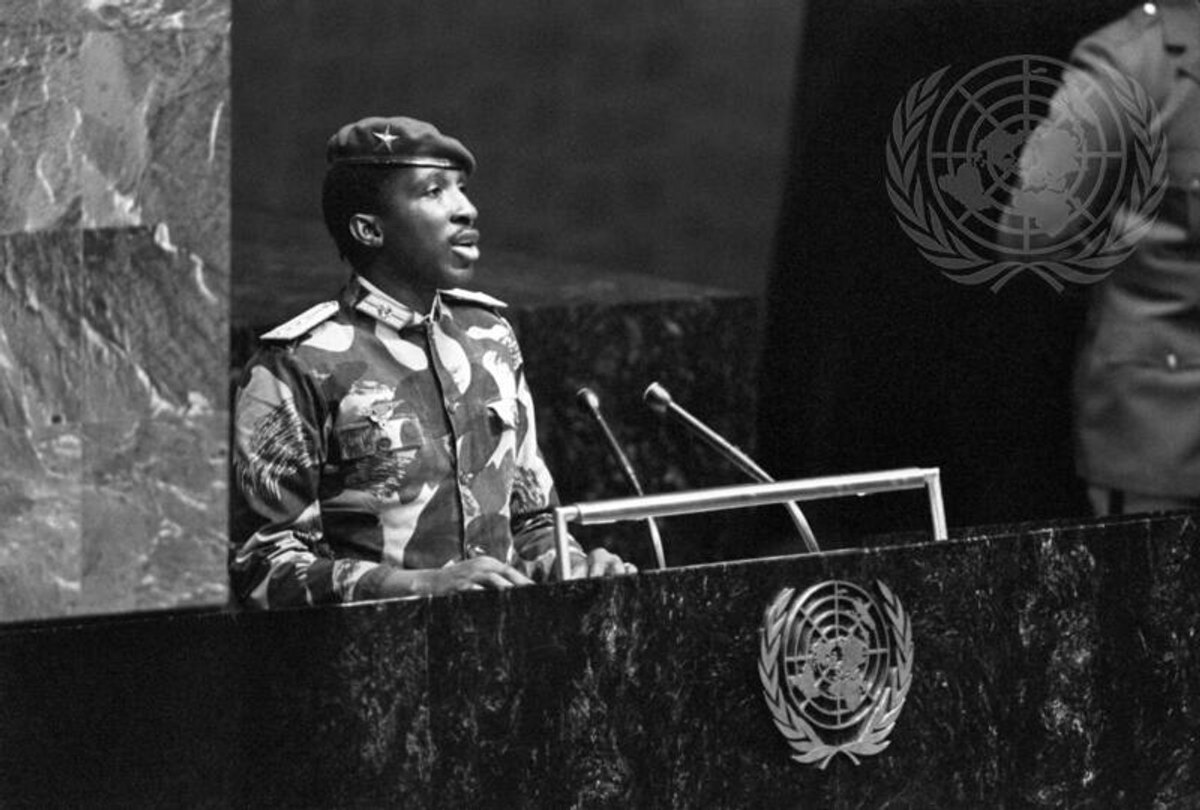
These resources are the core markers of dignity and survival. Under racial capitalism, however, these needs are commodified, meaning that access to them is controlled, restricted, and sold for profit. The system of immigration control, in particular, uses wealth and resources to strip us of our ability to meet these needs independently. When we can meet our essential needs, we can advocate for our rights, we can organise, protect and care for each other. Following the call from revolutionary leader of Burkina Faso, Thomas Sankara in his address to the United Nations 1984, “We must succeed in producing more…because it is natural that he who feeds you also imposes his will…We are free. He who does not feed you can demand nothing of you.. Our stomachs will make themselves heard and may well take the road to the right, the road of reaction, and of peaceful coexistence with all those who oppress us by means of the grain they dump here”. Through sovereignty there is collective autonomy and freedom from oppression who seek to control you.
By reclaiming and relocating these essential resources, we can shift power from the institutions that profit off our vulnerability to the communities that sustain and protect us. Relocating these resources within our own networks of care allows us to begin withdrawing from the institutions that harm us.
Reclaiming and Relocating Resources: How?
Reclaiming resources is about taking back what has been taken from us. This can manifest in tangible ways, such as creating community gardens to ensure access to food, or setting up mutual aid networks to provide medical care or shelter. These are direct acts of resistance against the commodification of our survival. When we take ownership of our resources, we break the chains that tie us to exploitative systems.
For example, reclaiming land through acts such as guerilla gardening or even community asset transfer, allow our communities the chance to house one another and grow our own food. These actions are radical acts of sovereignty — acts that refuse the extractive logic of capitalism and borders.
To relocate resources is to turn the question of reclaiming internally. It is about identifying and uplifting the resources we already give to one another, independent of and in spite of racial capitalism.
For example, relocating education may look like creating know your rights materials and sharing information that could stop an immigration raid or deescalate a police fingerprint scan and detainment. This type of relocating is both an act of community sovereignty and also the reclamation of dignity in spite of a violent and exploitative system.

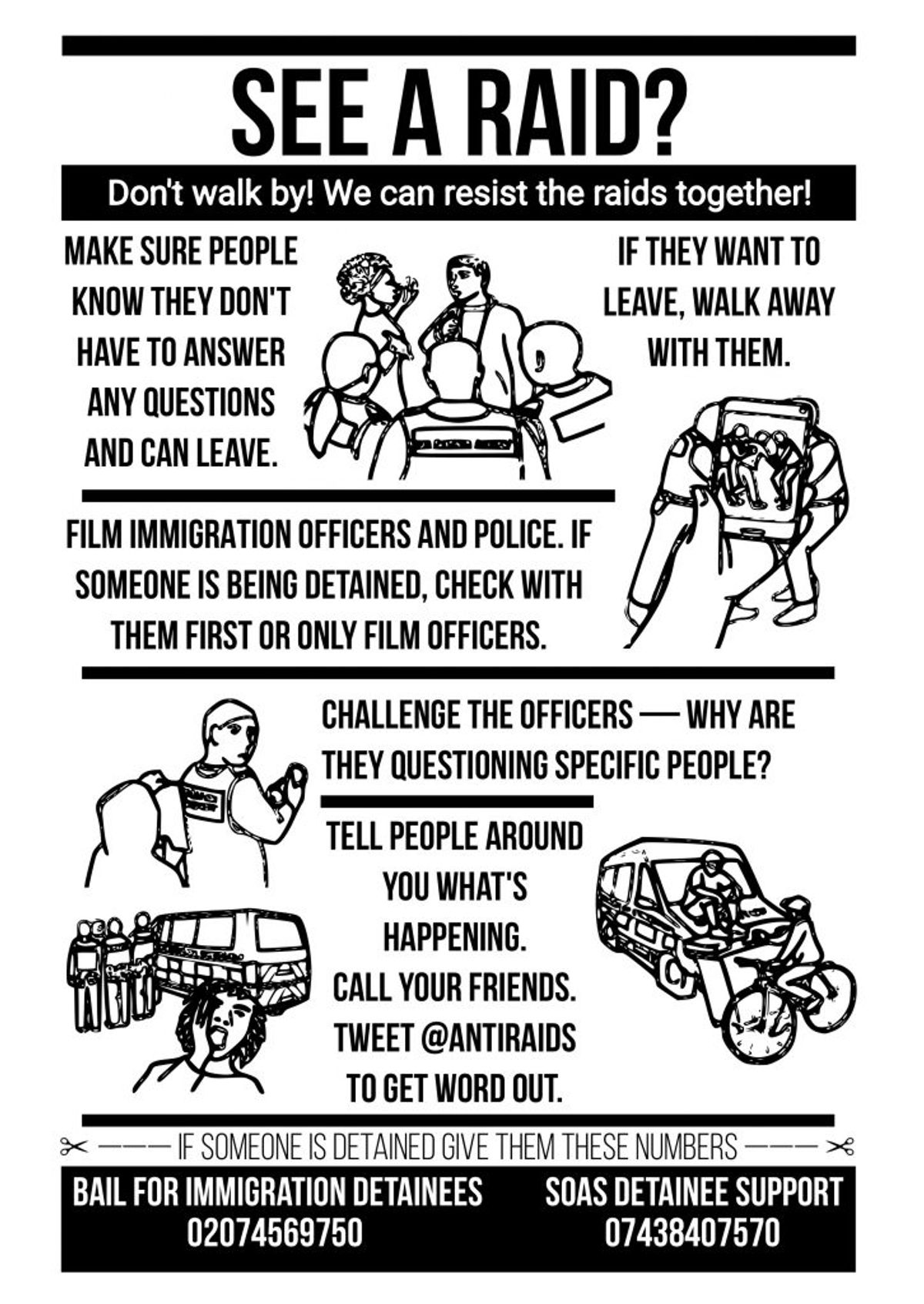
Know your Rights flyers by Stop the Scan and Anti-raids
By reclaiming these resources, taking back what was stolen, and relocating them, redistributing power and wealth within our networks, we enact reparations in practice. We shift authority from the Home Office and corporate profiteers back to the people, fulfilling both the spirit and the basic principles and international obligations for restitution from gross violations of human rights. In doing so, we move beyond mere survival toward sovereign communities where people, not profit, determine the terms of their existence.
In reclaiming and relocating our resources, we honour a historical legacy of resistance practices that have long fought colonial power and reclaimed our collective autonomy.
In our next part of the People Before Profit blog series, we will explore the landscape of organising within and against these systems, and the ways in which even our most radical spaces can be influenced by the systems we resist. We’ll also look at how our barriers are not personal failures, but are political conditions, and how movements are currently refusing these barriers.
Related Articles
RJN Statement on the Transitioning of Professor Jason Arday
24/08/2026 • RJN Team
One Year After Dr Pious Nyandoro: The Uncomfortable Truth About Empire, Borders and the Value of Black Life
23/07/2026 • Boucka Koffi